


Blogs
2025/11/30
Soma Ushio, MBA Class of 2025, began his Hitotsubashi ICS journey with an unforgettable first week of orientation that set the tone for his leadership development. Through team challenges, case-based learning, and reflective workshops, he discovered that leadership at ICS goes beyond strategy—it’s about collaboration, integrity, and self-awareness. With his cross-cultural background between Japan and Indonesia, Soma is eager to apply these lessons to strengthen business partnerships and foster sustainable growth between the two nations.
When I received the email about the first day of orientation, one detail immediately caught my attention: “Please wear clothing in which you can move around easily, such as shorts, sweats, T-shirts, and sneakers.”
That was unexpected. In most schools, the first day is ceremonial—a day of black suits, formal speeches, and polite introductions. Instead, ICS began our MBA journey with something that sounded closer to summer camp than graduate school. I didn’t know it yet, but that small detail captured what this experience would become: a leadership journey rooted not in hierarchy or formality, but in connection, curiosity, and growth.
As I walked into the building that morning, surrounded by classmates from all over the world, I felt a mix of excitement and nervousness. Many of us had only seen each other’s names. Now, we were finally meeting in person—future teammates, collaborators, and perhaps lifelong friends. Faculty members we saw on the ICS website greeted us with warmth and humor, immediately breaking the invisible wall between “professor” and “student.”
The first day turned out to be one of the most physically exhausting yet emotionally rewarding experiences I’ve ever had.
Day One: Moving, Laughing, and Learning
The morning began indoors, with activities designed to help us remember each other’s names. It started simple—throwing a ball and calling out the name of the person we wanted to pass it to—but soon evolved into rapid rounds of movement, coordination, and laughter. We formed big circles, then small circles, then big ones again. Each round brought more chaos and more laughter.
Then came a unique icebreaker: a one-minute speed introduction. We paired up, sat face-to-face, and introduced ourselves for sixty seconds before moving to the next partner. The catch? If you didn’t find a partner fast enough when the countdown ended, you had to stand alone in the middle of the room. That added just enough pressure to make everyone move quickly—and ensured no one stayed quiet or isolated. By the end, I had met nearly half of the class, and the energy in the room felt like electricity.
The next game moved outdoors. The facilitators divided us into two large teams for a physical challenge: moving everyone across wooden platforms using only a rope to swing from one to the other. The platforms were barely 1.5 square meters each, and we were about twenty-eight people. The goal? Get everyone across, then stay perfectly still together for 25 seconds without anyone touching the ground.
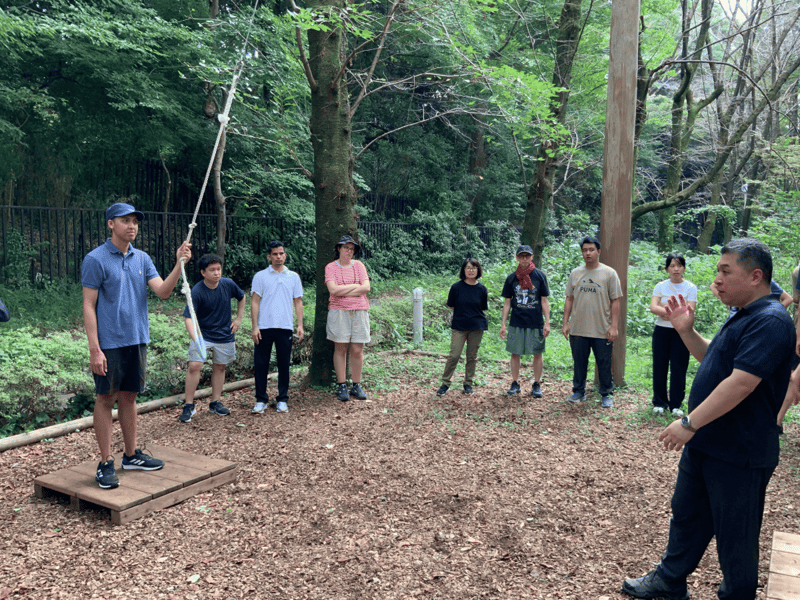
At first, it felt impossible. We fell, we shouted ideas, we laughed. Then we stopped and talked. Slowly, a plan emerged. We adjusted our strategy, communicated better, and began to trust each other’s rhythm. By the third or fourth attempt, something shifted—the chaos turned into coordination. Finally, after countless tries, our entire team stood together on the small wooden platform, holding our breath as we counted to twenty-five. When the facilitators shouted “Success!”, we cheered louder than any group of strangers should be able to.
It wasn’t just a game. It was a lesson in patience, collective problem-solving, and resilience.
That day, I learned that leadership isn’t about taking control; it’s about understanding how to move together. It’s about seeing the bigger picture—how one person’s step affects the balance of the entire group. The experience was sweaty, messy, and unforgettable. More importantly, it perfectly reflected the kind of leaders ICS hopes to develop: people who can collaborate, reflect, and adapt.
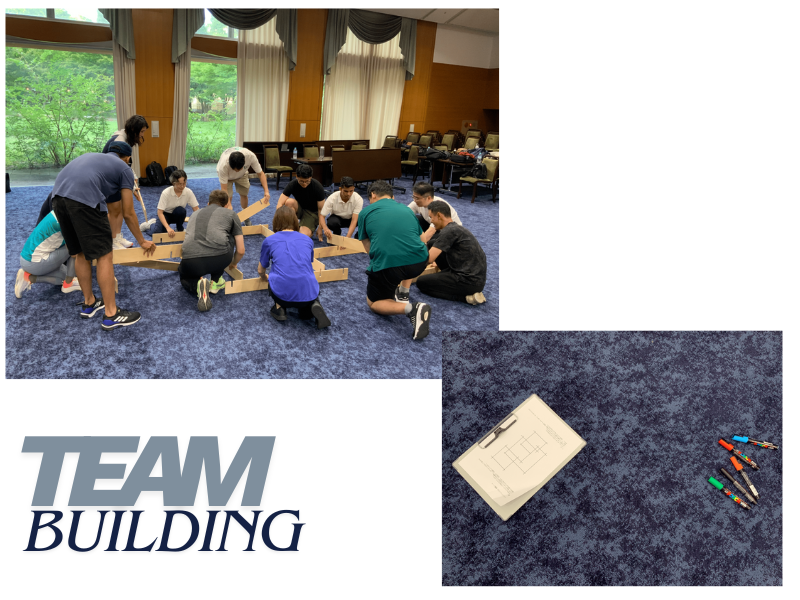
The Day After Day One
After the energy of the first day, the following sessions moved into the classroom—but the learning was just as intense.
Two sessions stood out most for me: Academic Integrity and Learning by the Case Method.
The Academic Integrity session might sound procedural at first glance, but it set a profound tone for what it means to be part of the ICS community. Every student entering ICS has at least two years of professional experience, meaning most of us came from the working world—where “integrity” often relates to compliance, accountability, or business ethics. Yet in academia, integrity carries a different weight. It’s not just about doing the right thing; it’s about learning to think critically, cite respectfully, and contribute honestly to shared knowledge.
What struck me most was how understanding the faculty were. They didn’t present these rules as punishment or bureaucracy. Instead, they explained them as part of our personal and professional growth—a foundation for trust in academic and business settings alike. It reminded me that true leadership begins with integrity. Without honesty and accountability, even the most intelligent strategy loses meaning.
Then came Learning by the Case Method, the pedagogical heart of the ICS MBA. For many of us, it was a completely new way of learning. Instead of lectures, we analyze real business cases, debate decisions, and learn from each other’s perspectives. Coming from various professional backgrounds—engineering, finance, marketing, policy, entrepreneurship—the diversity of thought in our classroom created a lively mix of opinions.
Our professor explained that the goal wasn’t to find a single “right answer,” but to sharpen how we think. The case method pushes you to frame problems clearly, listen deeply, and make decisions under uncertainty—all essential skills for leadership.
As discussions grew more dynamic, I realized that what mattered wasn’t just the content of each case, but the process of discussion itself. Learning by the case method is, in many ways, a leadership laboratory. It teaches us to voice opinions with confidence while staying open to disagreement. It shows us how to make decisions with limited information—a reality every leader faces.
By the end of that session, I understood why ICS emphasizes this approach: because leadership is not a solo performance. It’s a conversation.
Launching the Leadership Development Journey
At first, it didn’t feel like a typical lecture. Each of us was given a sheet of paper and a simple instruction: draw what leadership means to you. The room instantly filled with laughter and curiosity. Some drew knights, some drew anime characters, others drew people standing together or leading a team. When we shared our drawings, it was fascinating to see how different everyone’s interpretations were. That exercise made one thing clear: leadership is authentic to each person. There is no universal shape, no single formula. Everyone has their own story, and from that story, their leadership emerges.
Then the session shifted from playful to deeply insightful. We discussed the difference between cognitive skills (like analysis, planning, and strategy) and non-cognitive skills (like empathy, self-awareness, and resilience). Our facilitator shared a quote that stayed with me:
“Many CEOs feel ready for the strategic and business aspects of their roles, but much less prepared for the personal and interpersonal components of leadership—which are just as critical to success.”
That was the heart of the LDJ philosophy. ICS is not only preparing us to make business decisions; it’s preparing us to understand ourselves, manage emotions, and build relationships that last. Leadership, in this sense, is not a destination—it’s a lifelong journey.
Reflections: A Week that Mirrors the Journey Ahead
As I look back, that first week feels like a microcosm of what the ICS MBA stands for. It was physically demanding, intellectually stimulating, and emotionally grounding—all at once. The week taught me that leadership is not something you declare on your résumé; it’s something you practice in everyday interactions, whether during an outdoor challenge, a classroom debate, or a quiet reflection session.
What I appreciate most about ICS is how intentional everything feels. The design of the orientation week wasn’t random fun—it was a carefully crafted introduction to what our next two years would be about: collaboration, integrity, self-discovery, and growth—each session, from the outdoor games to the leadership workshop, connected seamlessly to a larger purpose.
To those considering the ICS MBA, I want to say this: do not worry about whether your background “fits.” ICS is not looking for one type of leader—it’s a place where diverse experiences come together and evolve. Whether you come from business, science, public service, or the arts, you will find that the program helps you discover your own authentic style of leadership.
For me personally, this first week reaffirmed why I came here. I wanted to learn not just how to lead teams or analyze markets, but how to become a more grounded, reflective, and empathetic leader. Surrounded by brilliant and supportive classmates, I feel motivated to grow—not through competition, but through collaboration.
As I write this, the term has just begun, and I am already aware of how much I’ve changed. My understanding of leadership has expanded beyond strategy and execution—it now includes patience, listening, and trust. The first week reminded me that leadership is not about being the loudest voice in the room, but about creating the space where everyone can contribute their best.
The playground games were fun, but they weren’t just games. They were metaphors for what lies ahead: challenges that require balance, teamwork, creativity, and courage.

|
Soma Ushio, a member of the MBA Class of 2025, was born between two cultures Japan and Indonesia, where he learned to navigate and adapt across different perspectives. This cross-cultural foundation shapes his leadership style and inspires his ambition to strengthen collaboration between the two nations. Before joining Hitotsubashi ICS, he worked for several Japanese companies in Indonesia, including Mizuho Bank, and now seeks to broaden his professional experience in Japan. At Hitotsubashi ICS, he focuses on corporate strategy, finance, and international business. With a deep interest in connecting Japanese business practices with Indonesia’s growing economy, he aims to foster sustainable partnerships that create long-term value for both sides. |

