

Blogs
2026/05/14
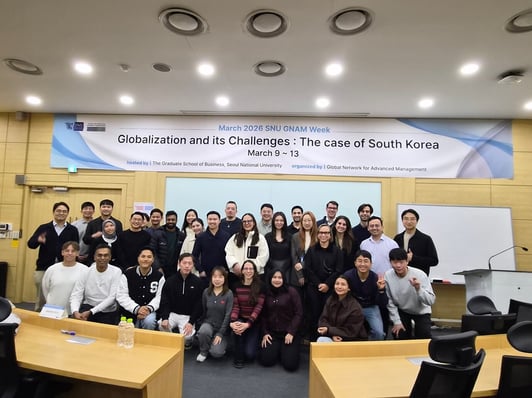
Global Network Week (GNW) at Seoul National University Graduate School of Business (SNU GSB) offered Class 2025 student Chen Hongxu (Hongxu) an opportunity to experience international business learning beyond the traditional MBA classroom. Through lectures, group projects, company visits, and cross-cultural collaboration, the program highlighted how culture, strategy, and local business environments are deeply interconnected. Reflecting Hitotsubashi ICS’s “Best of Two Worlds” philosophy, the experience encouraged Hongxu to connect diverse perspectives, rethink strategic decision-making in a global context, and better understand how successful organizations balance global ambitions with strong cultural identity.
By the middle of the week in Seoul, I realized that the most important lessons were not coming from any single lecture or assignment, but from how different moments started to connect. A discussion on market strategy in the morning would resurface during group work in the afternoon, and later appear again in small interactions that, at first, seemed unrelated. What initially felt like a fast-paced schedule gradually became something more layered—an experience that continuously challenged how I interpreted both culture and strategy.
Each day moved between structured lectures, discussions, and collaborative work, yet the learning did not remain confined to those settings. Ideas introduced in the classroom reappeared in practice, often in ways that were less obvious but more revealing. This made the experience feel less like a series of separate activities and more like an ongoing process of observation and adjustment.
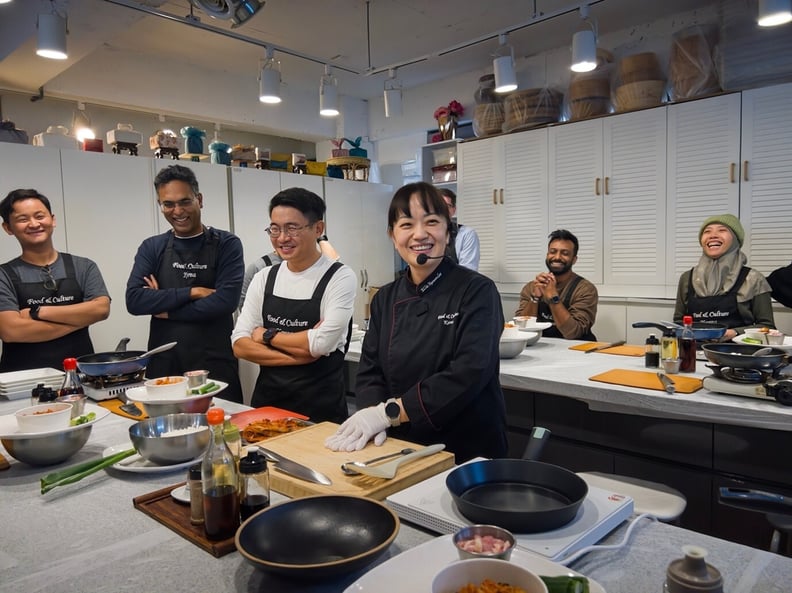
One of the most interesting aspects of the program was how structured activities and analytical work led to very different kinds of learning. During guided cultural sessions, tasks were clearly defined and outcomes were expected. Yet even within these settings, what stood out was not the task itself, but how people interacted—how coordination happened naturally, how individuals adjusted to one another, and how group harmony was maintained alongside efficiency.
At the same time, our group project presented a contrasting challenge. We were asked to select a company from our home country and design a strategy for entering the Korean market. Initially, I approached the task using familiar frameworks—market analysis, competitor positioning, and entry strategy. However, as discussions progressed, it became clear that many of our assumptions did not fully translate into the Korean context. We began to question whether we were truly analyzing the market, or simply applying logic that worked in our own environments.
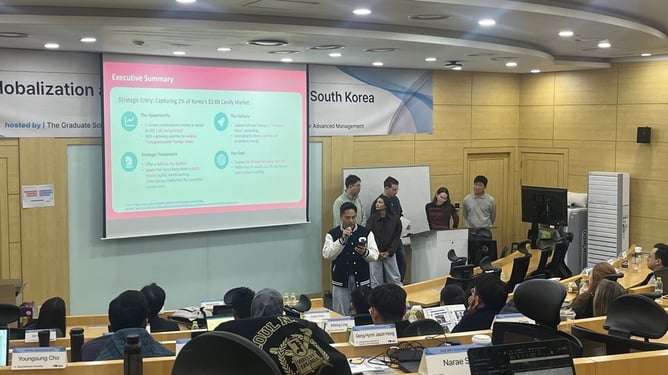
These two experiences—one grounded in observation and interaction, the other in structured analysis—became central to my learning throughout the week.
Understanding Culture Beyond Generalizations
Before the program, my understanding of Korean business culture was relatively simplified. I associated it with efficiency, speed, and hierarchy. While these characteristics are present, the reality proved to be far more nuanced.
What initially felt confusing was how different patterns emerged depending on the situation. In formal settings, hierarchy and structure were clearly visible. In more collaborative environments, interactions felt flexible and adaptive. At first, I interpreted this as inconsistency. Over time, I began to see it as contextual behavior—different norms being applied depending on the setting and relationships involved.
This realization shifted how I think about culture. It is not something static or easily summarized, but something that reveals itself through interaction. Understanding it requires observation, patience, and the ability to recognize subtle patterns rather than relying on predefined assumptions.
This insight is particularly relevant in international teamwork. Misunderstandings often arise not from major disagreements, but from small differences in expectations—how people communicate, how decisions are made, and how collaboration is approached. Experiencing these nuances firsthand made me more aware of the need to adapt, rather than assume.
Applying Strategy in Context
Alongside cultural understanding, the program emphasized the importance of applying strategy within a specific context. The ABCD framework—Agility, Benchmarking, Convergence, and Dedication—provided a useful structure for analyzing Korea’s economic development and corporate competitiveness.
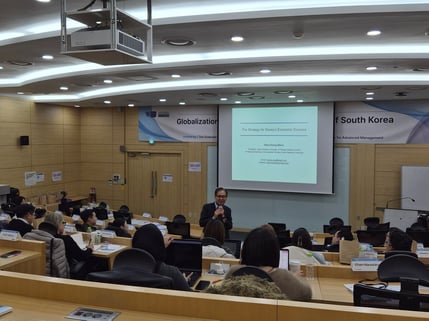
However, its real value became evident during the group project. While the framework initially appeared straightforward, applying it to a real market entry scenario revealed its complexity.
Each component raised challenging questions. Agility required us to consider how a company could respond to a market we only partially understood. Benchmarking involved analyzing strong local competitors, but also recognizing the limits of imitation. Convergence highlighted the importance of integrating into local ecosystems, something difficult to assess without direct experience. Dedication emphasized long-term commitment, forcing us to move beyond short-term strategic thinking.
What became clear was that frameworks do not provide answers—they shape the way questions are asked. The effectiveness of strategy depends less on the framework itself and more on how well it is adapted to the specific environment.
From Theory to Practice: The AmorePacific Visit
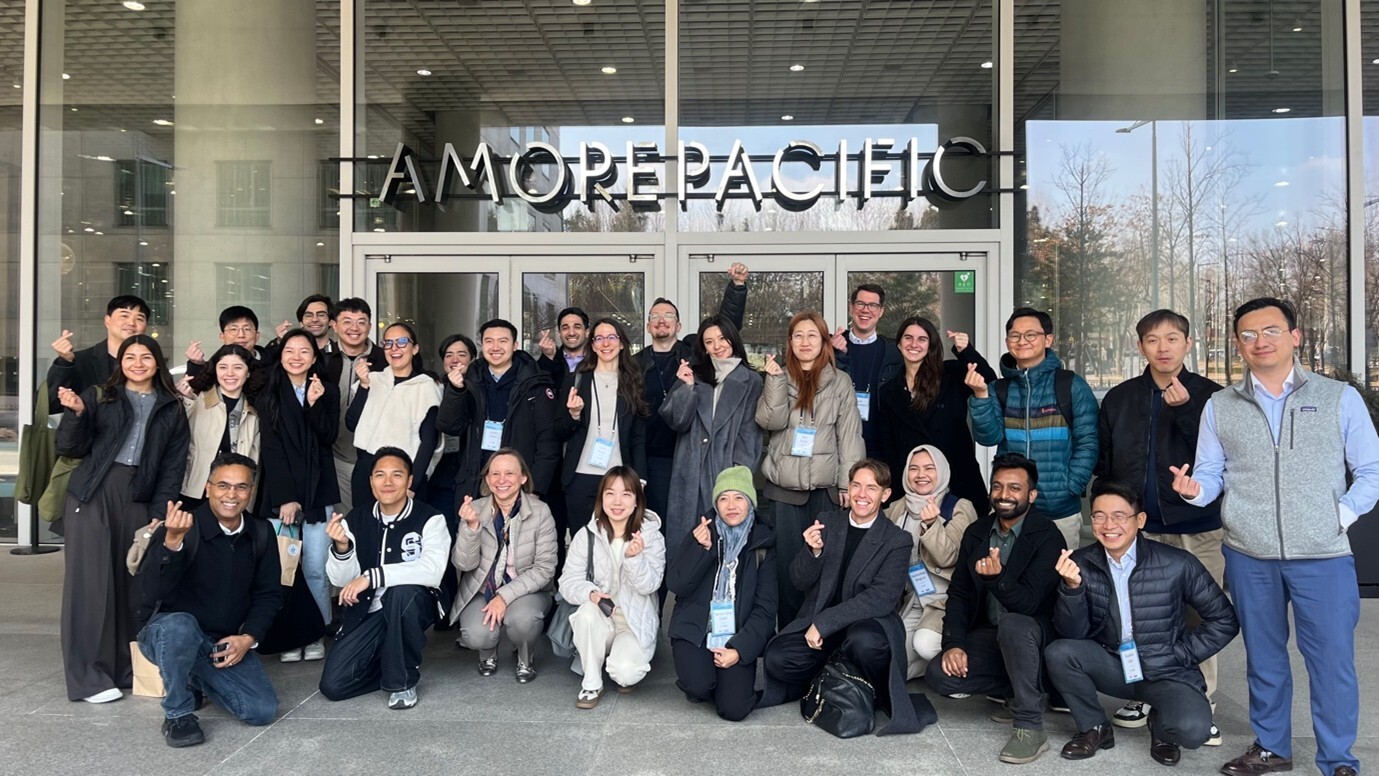
The company visit added another dimension to these reflections by showing how these ideas are implemented in practice. Visiting Amorepacific provided a concrete example of how a Korean firm balances global ambition with strong local identity.
What stood out was how the company does not simply export products, but translates Korean cultural elements into a form that resonates internationally. Rather than positioning itself purely as a global cosmetics brand, it leverages its heritage—ingredients, design philosophy, and brand storytelling—as a source of differentiation.
This approach reflects a form of “convergence” that we had discussed in the ABCD framework. Instead of choosing between localization and standardization, the company integrates both. It adapts to global markets while maintaining a distinct identity rooted in its origin.
At the same time, the visit highlighted the operational side of strategy. Branding decisions, product development, and market expansion are all interconnected. What appears externally as a cohesive brand is supported internally by deliberate choices about positioning, investment, and long-term commitment.
This made one point particularly clear: successful internationalization is not just about entering new markets, but about consistently aligning strategy, culture, and execution. It also reinforced the idea that competitive advantage can come from identity—when it is translated thoughtfully into different contexts.
Connecting Different Dimensions of Business
Another key takeaway from the week was how interconnected different aspects of business are. Culture, strategy, and external environment are often discussed separately, but in practice, they constantly influence one another.
During discussions, analyzing a market entry strategy often led to questions about consumer behavior, which in turn connected to cultural norms. Similarly, evaluating competitive dynamics raised broader considerations about global positioning and economic trends.
The AmorePacific visit reinforced this connection. What initially appeared as branding or marketing decisions were deeply tied to cultural interpretation and strategic positioning. This made it clear that business decisions cannot be isolated—they are part of a broader system.
Impact on My MBA Journey at ICS
These insights have influenced how I approach my MBA experience at Hitotsubashi ICS.
Academically, I have begun to think more integratively. Rather than treating subjects such as finance, strategy, and leadership as separate areas, I now try to connect them. When analyzing a case, I consider not only financial outcomes, but also the broader context in which decisions are made.
In group work, I have become more attentive to team dynamics. The experience in Seoul highlighted how subtle differences in communication and expectations can influence collaboration. I now pay closer attention to how discussions unfold and how alignment is achieved within diverse teams.
From a career perspective, the program has clarified the skills required to work in a global environment. I am particularly interested in investment banking, especially in cross-border transactions. This experience reinforced that technical expertise alone is not sufficient. Understanding local context, interpreting cultural dynamics, and evaluating strategic fit are equally important.
The company visit made this especially tangible. When evaluating a business, it is not enough to analyze financial performance. It is also necessary to understand how the company positions itself, how it adapts across markets, and how sustainable its strategy is in different environments.
A Lasting Takeaway
Looking back, what made the week impactful was not any single activity, but how different elements reinforced one another. Lectures introduced frameworks, group work tested their application, company visits demonstrated execution, and interactions revealed how these ideas function in practice.
If there is one lasting takeaway, it is a shift in how I approach complexity. Rather than trying to simplify it, I have become more comfortable engaging with it—understanding its multiple layers and working within its uncertainties.
This mindset will continue to shape my MBA journey. Instead of focusing only on learning frameworks, I aim to apply them more thoughtfully. Instead of looking for clear answers, I focus on better understanding the context in which decisions are made.
Global Network Week in Seoul did not provide definitive solutions, but it changed how I think about problems. It made me more aware of context, more attentive to subtle differences, and more deliberate in connecting ideas. That shift, more than any individual concept, is what I will carry forward.

|
Chen Hongxu (Hongxu) Hitotsubashi ICS MBA Class of 2025, Hongxu was born in China and previously built a five-year career in audit and risk assurance. Through his work with multinational corporations across various industries, he developed expertise in financial analysis, risk management, SOX compliance, and cross-border client communication. In particular, his experience supporting global clients strengthened his ability to adapt quickly in international environments and deepened his interest in the financial market and sustainable business practices. At Hitotsubashi ICS, his academic interests center on corporate finance, sustainable investment, and strategy. Drawing on his background in accounting and audit, he hopes to explore how finance can contribute to ethical business practices and long-term sustainable growth. |