

News
2025/12/15
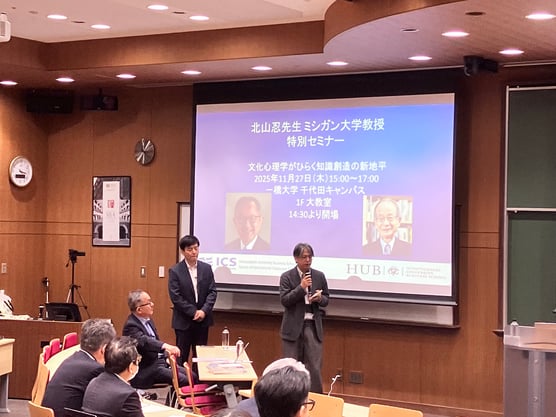
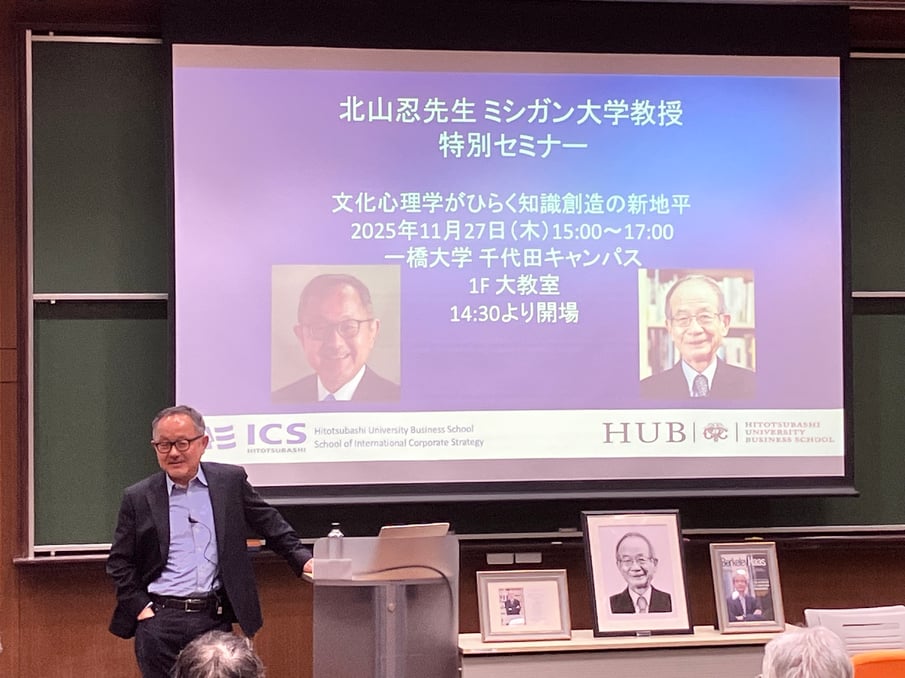
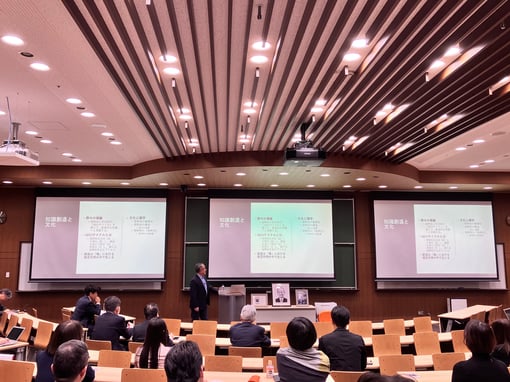
On November 27, 2025, Hitotsubashi ICS hosted a special seminar by Professor Shinobu Kitayama of the University of Michigan at the Hitotsubashi University Chiyoda Campus. Conducted in Japanese, the seminar brought together scholars and practitioners who share an interest in cultural psychology, knowledge creation theory, and their implications for organizations and society.
The event attracted participants from both within and outside the university, reflecting sustained interest in interdisciplinary perspectives that bridge psychology, management, and the social sciences. The seminar formed part of Hitotsubashi ICS’s ongoing efforts to foster dialogue between foundational theory and contemporary organizational challenges, building on the intellectual legacy of the late Professor Emeritus Ikujiro Nonaka.
A Longstanding Intellectual Dialogue with ICS
Professor Kitayama is internationally recognized as a pioneering scholar in cultural psychology and cultural neuroscience. Over the years, he has maintained a deep and sustained intellectual dialogue with Professor Nonaka, one of the founders of knowledge creation theory. Through multiple visits to Hitotsubashi ICS under the Nonaka Endowment, Professor Kitayama has engaged closely with ICS faculty and DBA Program students, contributing to discussions on how culture shapes the human mind, organizational behavior, and collective knowledge creation.
These exchanges have played a formative role in connecting cultural psychology with management theory at Hitotsubashi ICS. They have also helped frame culture not as a static background variable, but as a dynamic system that actively shapes and is shaped by human cognition, emotion, and social practice.
From Cultural Psychology to Knowledge Creation
The seminar drew extensively on Professor Kitayama’s latest book, Culture Shapes the Mind? Adventures in Cultural Psychology (Iwanami Shinsho, 2025), much of which was written during his stay at Hitotsubashi ICS. The book represents the culmination of decades of research in cultural psychology and cultural neuroscience and has received widespread critical acclaim in Japan.
In his lecture, Professor Kitayama revisited key findings from cultural psychology, demonstrating how culturally embedded patterns of thought and behavior influence perception, motivation, and social interaction. He then explored how these insights resonate with and extend knowledge creation theory, particularly in understanding how organizations generate, sustain, and transform knowledge over time.
Rather than treating knowledge creation solely as a managerial process, Professor Kitayama emphasized its deeply cultural foundations. He argued that organizational knowledge emerges from ongoing interactions among individuals embedded in specific cultural, historical, and social contexts—an insight that closely aligns with Professor Nonaka’s original vision of the knowledge-creating enterprise.
Culture as a Moral and Social Ecosystem
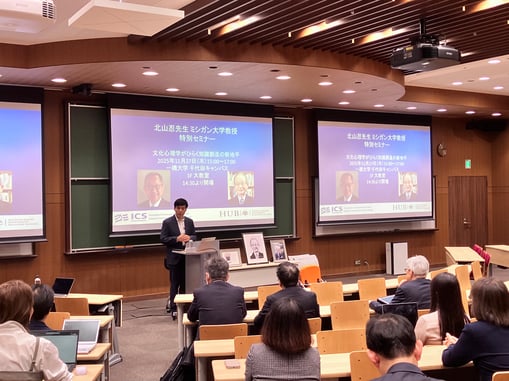
A central theme of the seminar was the dynamic and systemic nature of culture. Professor Kitayama described culture not merely as a backdrop to action, but as an active force that both shapes and is shaped by cognition, emotion, and social practice. As cultural and organizational systems become increasingly complex, he noted, individuals often encounter moral and practical dilemmas.
For example, individuals may experience tension between personal beliefs and organizational expectations, or between ethical judgment and loyalty to collective goals. Professor Kitayama suggested that addressing such tensions lies at the heart of rethinking knowledge creation, not simply as a tool for efficiency or innovation, but as a moral and cultural ecosystem that requires careful design and stewardship.
This perspective invites a reexamination of organizations as sites of ethical as well as epistemic activity. In this sense, knowledge creation becomes inseparable from questions of values, responsibility, and the long-term sustainability of social systems.
Dialogue and Future Directions
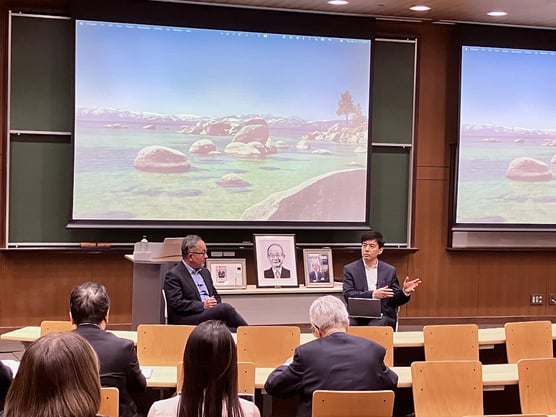
The seminar concluded with an engaging dialogue session and Q&A, during which participants from diverse backgrounds reflected on how insights from cultural psychology might inform future research and practice. Questions ranged from the application of cultural psychology in organizational design to its implications for leadership, innovation, and societal change.
The lively exchange underscored the continuing relevance of interdisciplinary dialogue at Hitotsubashi ICS. By bringing together perspectives from psychology, management, and neuroscience, the seminar reaffirmed Hitotsubashi ICS’s role as a platform for advancing integrative approaches to knowledge creation.
Through events such as this special seminar, Hitotsubashi ICS continues to carry forward Professor Nonaka’s intellectual legacy while opening new pathways for inquiry into how culture, mind, and organization interact in an increasingly complex world.